

Table of Contents
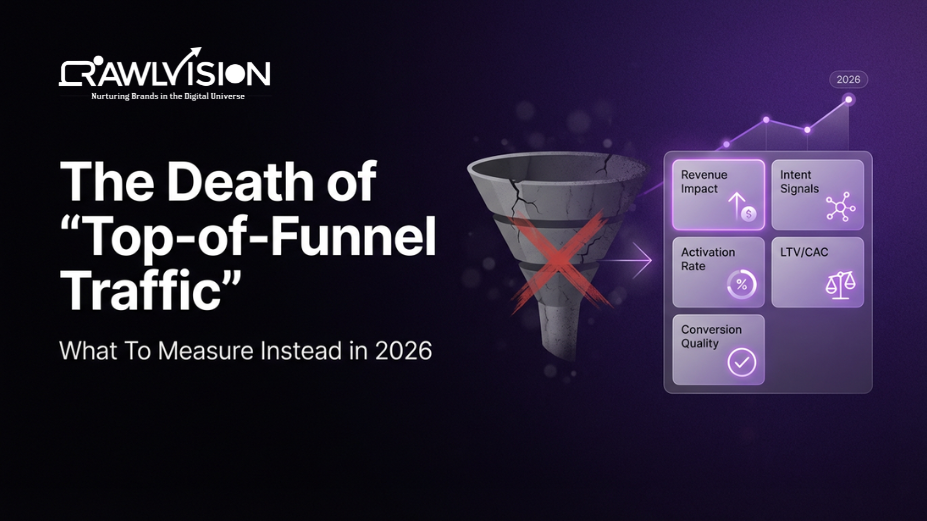
ToggleThis does not mean TOFU is dead. It means traffic is no longer the right primary metric. TOFU should now be measured by how effectively it builds demand, trust, and downstream conversions.
Why traditional TOFU traffic is breaking down
Informational queries such as “what is,” “how does,” and “best way to” are now frequently answered directly in search results. AI summaries reduce the need for users to click through to websites, especially for early-stage questions.
At the same time, user behaviour is shifting toward conversational and AI-assisted discovery, which further reduces reliance on traditional search clicks.
This creates a misleading situation:
- Rankings and impressions may stay stable or increase
- Click-through rates decline on TOFU keywords
- Traffic-based reports suggest content is underperforming
- Real influence is happening invisibly
- If TOFU is judged only by sessions, brands will underinvest in the very content that drives future demand.
What TOFU should be measured by instead
Demand creation rather than raw sessions
TOFU content works when it increases future intent.
Key indicators include:
- Growth in branded search queries
- Visibility for high-intent non-branded terms such as comparisons, pricing, and alternatives
- Share of search against competitors
This connects awareness content to real buying behaviour instead of treating TOFU as an isolated traffic channel.
A strong technical foundation, clean internal linking, and clear content structure are essential to capture this demand, which is why a system-led approach like Crawl Vision’s Search Engine Optimization services matters at this stage.
Visibility without clicks still has strategic value
In a zero-click environment, impressions are no longer vanity metrics.
What to track:
- Google Search Console impressions for TOFU topic clusters
- Average position consistency for queries that trigger AI Overviews
- Presence in SERP features such as FAQs, snippets, and video panels
If your brand consistently appears here, it is shaping perception even when users don’t visit immediately.
Engagement quality matters more than volume
When clicks are harder to earn, each visit must be more meaningful.
Focus on:
- Engaged sessions in GA4
- Engagement time and scroll depth
- Internal CTA interactions
- Return visitors who first entered through TOFU content
This shows whether TOFU is attracting qualified attention rather than empty pageviews.
Assisted conversions reveal TOFU’s real impact
TOFU content rarely converts on the first visit. Its role is to educate and influence.
Better indicators include:
- Assisted conversions in GA4
- First-touch and early-touch attribution paths
- TOFU-to-MOFU-to-BOFU content journeys
Last-click-only models consistently undervalue awareness content and lead to poor strategy decisions.
Authority and trust signals are now critical
AI-driven discovery relies heavily on credibility.
Important signals include:
- Relevant editorial backlinks and mentions
- Evidence of expertise, such as named authors and original insights
- Consistent brand and entity signals across the site
This is where authority-building initiatives, including Crawl Vision’s Digital PR services, directly support both organic performance and AI visibility.
A practical TOFU measurement framework for 2026
Replace traffic-only reporting with a four-part scorecard.
Visibility
- Topic-level impressions
- Non-branded keyword coverage growth
- SERP feature presence
Trust
- Quality backlinks and mentions
- Depth and originality within topic clusters
- Clear expertise signals
Action
- Engaged sessions from TOFU pages
- Internal movement to the evaluation content
- Assisted conversions
Revenue impact
- Leads influenced by TOFU content
- Sales velocity differences
- Win-rate improvements
If only one change is made, start reporting assisted conversions alongside impressions and branded demand.
How content strategy must evolve
AI can summarise surface-level information. It cannot replace original thinking.
High-performing TOFU content now focuses on:
- Decision frameworks rather than definitions
- First-hand insights and experience-driven examples
- Clear internal paths toward evaluation and conversion
Content created only to attract pageviews will continue to lose value.