



Brand authority grows when a business consistently demonstrates expertise, publishes useful content, earns credible mentions and links, builds customer trust, and stays visible across AI platforms and organic searches. It is a long-term process.
What Is Brand Authority?
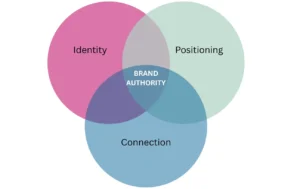
Brand authority is the level of trust and recognition a brand earns through consistent evidence of expertise, relevance, credibility, and usefulness. A brand with strong authority is more likely to be trusted by customers, referenced by other websites, and discovered through search.
Brand authority is broader than a website authority metric. It develops through connected signals such as expertise, useful content, credible references, customer experiences, consistent brand information, and website reliability.
Why Does Brand Authority Take Years to Build?
Brand authority takes time because trust compounds through repeated experiences and consistent evidence. One article, campaign, or backlink rarely changes how an audience understands a brand.
A company that publishes useful content, earns relevant mentions, updates its resources, and collects genuine customer feedback gradually builds more evidence of expertise and reliability.
Over time, these signals reinforce one another. Strong content can attract links and mentions, while useful experiences can lead to reviews, referrals, and branded searches.
How to Build Brand Authority That Lasts: 8 Proven Ways
1. Build Deep Expertise Around a Clear Topic
Decide what your brand should be known for. Build connected resources around that area instead of publishing unrelated articles simply to target more keywords.
For example, an SEO agency can cover technical SEO, content optimization, keyword research, internal linking, and AI search within a connected ecosystem. This demonstrates depth.
2. Create Content Based on First-Hand Experience
First-hand experience gives content details that generic summaries often lack. Show readers what you have actually observed, tested, built, or learned.
Useful evidence includes original research, case studies, screenshots, expert commentary, and lessons from real projects.
At Crawl Vision, recurring observations from website audits can be turned into practical insights. This gives content a perspective that cannot come from simply rewriting information already online.
3. Earn Relevant Backlinks and Brand Mentions
Relevant backlinks and credible brand mentions can strengthen a brand’s online presence. Focus on earning references from websites, publications, and organizations genuinely connected to your industry.
Useful approaches include digital PR, original research, expert contributions, industry resources, partnerships, and link-worthy data.
The goal is not to collect the largest possible number of links. Relevant references are more useful than unrelated links.
4. Make Your Website a Reliable Source
Your website should make it easy for people to understand who you are, what you know, and why they can trust your information. Keep important pages accurate, useful, accessible, and technically healthy.
Review your site for outdated claims, broken links, unclear authorship, missing business information, and poor user experience.
A strong technical foundation supports users and search engines. Regular website audits can identify issues that quietly weaken the overall experience.
5. Build Consistent Brand Signals Everywhere
Brand information should remain consistent across your website, business profiles, social platforms, directories, review sites, and industry publications.
Keep business details, descriptions, expertise, and author profiles accurate. Maintain important business profiles instead of treating them as one-time setup tasks.
Consistency helps people recognize the same organization across different discovery channels.
6. Turn Customer Proof Into Authority
Customer experiences can provide evidence that your expertise translates into real value. Use genuine reviews, testimonials, case studies, and customer stories where appropriate.
Specific proof is more useful than vague claims. A case study explaining the problem, process, and measurable outcome gives potential customers a clearer reason to trust your expertise.
7. Keep Your Best Content Fresh
Authority can weaken when useful content becomes outdated. Review important pages periodically and update information that has changed.
Prioritize pages with strong traffic, important rankings, valuable backlinks, conversion potential, or time-sensitive information.
Refresh statistics, examples, screenshots, links, and recommendations when necessary. If a page no longer serves a useful purpose, consolidate or remove it rather than keeping outdated content.
8. Build Authority Beyond Traditional Google Search
Brand authority now matters beyond traditional search. People can discover businesses through Google AI Overviews, AI Mode, ChatGPT, Gemini, Perplexity, social platforms, and industry websites.
Create information that is clear, specific, credible, and easy to reference. Explain expertise directly, support claims with evidence, and maintain consistent branding across the web.
For brands investing in AI search visibility, the goal is not simply to appear for a keyword. It is to become a recognizable and useful source within a topic.
A Long-Term Brand Authority Framework
| Stage | Focus | Examples |
| Establish | Define expertise | Topics, positioning, expert profiles |
| Demonstrate | Show knowledge | Guides, case studies, research |
| Earn | Gain external validation | Links, mentions, digital PR |
| Reinforce | Build trust | Reviews, testimonials, customer proof |
| Maintain | Protect authority | Updates, audits, technical SEO |
| Expand | Increase discovery | Search, AI search, industry platforms |
What Can Weaken Brand Authority Over Time?
Brand authority can decline when a business stops maintaining the signals that created trust. Problems include:
- Publishing thin or repetitive content at scale
- Building irrelevant or manipulative links
- Making unsupported claims
- Leaving important pages outdated
- Providing inconsistent business information
- Ignoring customer feedback
- Relying entirely on one traffic source
- Prioritizing keyword volume over audience needs
Long-term authority depends on quality and consistency. Shortcuts do not replace sustained evidence of expertise.
How Do You Measure Brand Authority?
Brand authority does not have one universal score. Measure several signals over time and look for trends.
- Track branded search impressions and clicks in Google Search Console.
- Monitor branded and non-branded organic visibility.
- Review the quality of referring domains and brand mentions.
- Monitor reviews, ratings, and customer feedback.
- Measure direct traffic and returning visitors.
- Track AI search mentions or citations where reliable measurement is available.
- Connect visibility signals with leads, sales, or other business outcomes.
Example:
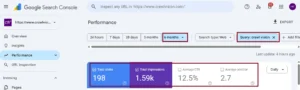
Note: This screenshot shows branded search data for Crawl Vision, one of the indicators of website authority.
Conclusion
Brand authority is built through consistency, not a single tactic. Businesses that demonstrate expertise, publish first-hand content, earn relevant references, maintain trustworthy websites, and keep information current can build stronger authority over time.
For Crawl Vision, this also means thinking beyond traditional rankings. Search visibility, brand recognition, and AI search visibility increasingly work together, creating more opportunities to be discovered and trusted.