


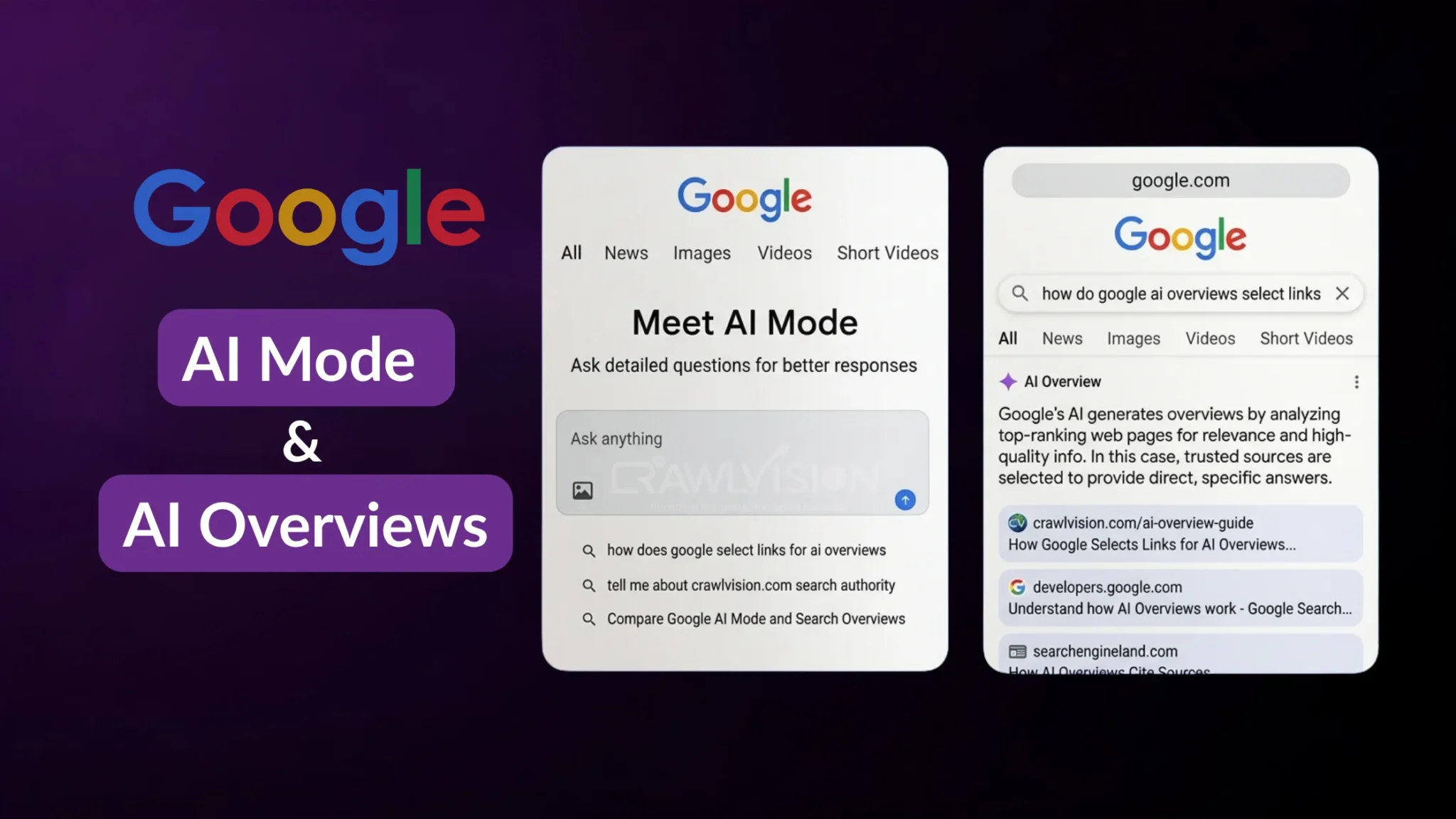
Google has explained how it chooses the websites and pages linked in AI Overviews and AI Mode, giving website owners a clearer look at what happens between a user’s search query and the sources displayed in an AI-generated answer.
In a new documentation page published on November 24, 2026, Google outlined how its generative AI search features retrieve web pages, use related searches, verify information, and decide which sources to display. It also explained the checks used to evaluate factual accuracy and handle incorrect attributions.
The explanation makes one thing particularly clear: AI search visibility is still closely connected to Google’s traditional Search ranking and quality systems. Getting cited in an AI-generated answer is not simply about writing content that sounds natural to an AI model. Your pages must also be discoverable, relevant, reliable, and useful to the information being presented.
For SEO professionals and website owners, this documentation offers a better understanding of how Google selects AI Overviews links and what they can do to improve their chances of appearing as supporting sources.
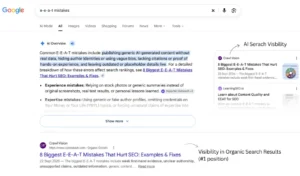
How Google Selects Links for AI Overviews and AI Mode
Google uses a customized Gemini model integrated with its core Search ranking, information retrieval, and quality systems to generate responses and connect them with relevant web pages. According to Google, the source selection process involves four main stages.
1. Google starts with its search index
The process begins with pages already available in Google’s Search index.
For AI Overviews on web searches, Google first examines ranked search results to identify pages relevant to the user’s query. It then provides snippets from those pages to the model as a starting point for generating the overview.
The Search index contains information gathered through crawling, including signals related to a page’s topical relevance, freshness, and other characteristics.
This means traditional SEO remains important. If your website’s content cannot be discovered, crawled, or indexed properly, it has fewer opportunities to become a supporting source in Google’s AI search experiences.
2. Google Uses Query Fan-Out to Find Related Sources
Google doesn’t always rely on results from the original search query alone. Its AI systems may also run additional related searches, a process known as query fan-out. These searches help Google retrieve pages that address different parts of a user’s original question. For example, someone searching for “how to improve website speed” might also need information about image optimization, browser caching, Core Web Vitals, and server response times.
Google can run related searches around these subtopics to gather additional information and identify relevant sources. For website owners, this creates an opportunity to appear for related aspects of a topic, not just the exact keywords targeted by a single page. However, it doesn’t mean publishing a separate article for every possible related query. The goal should be to cover relevant user questions naturally through useful, well-organized content.
3. Google Grounds AI Responses in Supporting Sources
After retrieving relevant web pages, Google’s systems use those results to ground the generated response. Google describes this process as grounding and corroboration. The model synthesizes information from retrieved sources and links to pages that support the claims included in its response. This distinction matters because being relevant to a search query and supporting a specific statement are not necessarily the same thing.
For example, an article about website security might be relevant to a broader cybersecurity question. However, if an AI-generated answer makes a specific claim about SSL certificates, Google needs supporting information that actually addresses that claim. This makes factual accuracy, clear explanations, and credible sourcing important considerations for content creators.
4. Google Decides Which Supporting Links to Display
Finding relevant sources doesn’t mean Google will display every retrieved page. Google says its systems balance relevance and quality signals from Search ranking with the need for a clear layout across desktop and mobile devices.
It also considers source diversity to help users explore a topic through different useful websites. Depending on the response, links can appear in several formats:
- Inline links: Clickable links embedded directly within AI-generated answers.
- Grouped source cards: Multiple supporting sources displayed together.
- Expandable link carousels: Website names, favicons, and article titles presented in an expandable format.
This means AI citation visibility involves more than getting a page retrieved. Google’s systems must also determine whether and how that source is useful to the person reading the answer.
How Google Checks AI Overviews for Accuracy
Selecting relevant sources is only one part of the process. Google also applies automated checks to reduce inaccurate responses and ensure that the linked pages support the information presented. Google has outlined two main checks before an AI-generated response appears.
- Safety and policy guardrails: Google’s systems apply stricter quality requirements to sensitive topics, including health and financial information. They may avoid showing an AI-generated response when it could create safety risks, violate Search policies, or lack reliable consensus. This can also apply to breaking news with limited coverage.
- Corroboration with reliable sources: Google checks generated claims against a range of sources, including web results, data feeds, and its Knowledge Graph, to determine whether the information is supported.
Google also evaluates the accuracy of its generative AI systems continuously through automated checks, accuracy benchmarks, and pre-launch A/B testing. It reviews user feedback to identify inaccurate information or incorrect source attribution.
When Google identifies problems, it can adjust its systems to limit certain responses, strengthen retrieval and grounding, prioritize authoritative pages, or remove responses that violate Search policies.
What Can Websites Do to Appear in Google AI Overviews and AI Mode?
Google’s documentation doesn’t introduce a separate set of ranking requirements for AI Overviews or AI Mode. Instead, it recommends following the same SEO practices that help websites perform in traditional Search. However, its explanation of source selection gives website owners several areas worth reviewing.
1. Make sure your website is indexed and eligible
A page must be indexed and eligible to appear in Google Search with a snippet before it can be displayed as a supporting link in AI Overviews or AI Mode. Start by checking whether Google can crawl your important pages. Review robots.txt restrictions, indexing directives, canonical tags, and internal links.
Also make sure important information is available in text rather than relying entirely on images or other elements that search systems may not interpret as expected.
2. Publish helpful and reliable content
Google looks for high-quality information that supports the claims in its AI-generated responses. Focus on publishing content that directly addresses user questions, explains concepts clearly, and provides useful information rather than repeating existing material.
Include credible references where appropriate, identify authors, and provide background about your website through author profiles and an About page.
3. Build content around related user questions
Query fan-out shows why covering a topic beyond its primary keyword can be valuable.
Instead of optimizing a page for one search phrase, identify the related questions users might ask before, during, and after their initial search.
For example, a website targeting website speed optimization could also address image compression, Core Web Vitals, caching, and server performance within a relevant content structure. This helps create useful topical coverage and gives Google more relevant information to retrieve when answering related queries. The focus should remain on satisfying user needs, not producing multiple thin pages to target every possible query variation.
4. Keep information accurate and monitor AI visibility
Review important pages regularly to identify outdated statistics, incorrect claims, broken references, and information that no longer reflects current practices. Google specifically advises updating content when information changes rather than changing publication dates without making substantial improvements.
Website owners should also monitor how their content appears in AI search experiences.
Google recommends using the Generative AI performance report in Search Console to understand how people discover content through its generative AI features.
You can also manually search for relevant queries and review which pages appear as supporting sources. These checks can help identify opportunities to improve content accuracy and understand changes in AI search visibility.
What If Google Attributes Your Content Incorrectly?
Google has also explained what publishers can do when their content is misrepresented or incorrectly attributed in AI Overviews and AI Mode. Its recommendations depend on the type of issue:
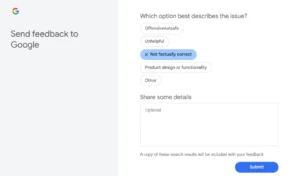
- Incorrect attribution: Submit feedback using the Feedback option below the AI-generated response in Google Search.
- Incorrect information on your page: Update the affected content and request Google to recrawl the page.
- Another website receives credit for your content: Review canonicalization and syndication settings. If another website copied your content without permission, consider Google’s copyright reporting process.
- Unwanted page content appears: Use controls such as nosnippet, data-nosnippet, or max-snippet to restrict the text displayed in Search, including AI features.
These options give website owners more clarity about how to respond when their content is used or represented incorrectly.
Does Ranking in Google Search Guarantee AI Overviews Citations?
No, ranking in traditional Google Search does not guarantee that a page will appear as a source in AI Overviews or AI Mode. Google’s documentation explains that its AI systems consider multiple factors when retrieving and selecting sources, including relevance, quality, corroboration, and source diversity.
A page might be relevant to the original search query but may not provide the specific information needed to support the AI-generated response. Similarly, being indexed and meeting Google’s technical requirements only makes a page eligible for consideration. It does not guarantee that Google will crawl, select, or display it.
This is an important distinction for businesses investing in SEO and generative engine optimization (GEO). Organic rankings remain valuable, but they don’t tell the complete story of a website’s visibility across AI-powered search experiences.
Conclusion: What Google’s New Documentation Means for SEO & GEO?
Google’s explanation offers a useful reminder that AI search visibility is not disconnected from traditional SEO. Its source selection process still relies on the Search index, ranking systems, information retrieval, and content quality. Query fan-out expands how Google discovers relevant information, while grounding and corroboration help connect AI-generated claims with supporting web pages.
For website owners, the practical takeaway is to focus on making content discoverable, accurate, trustworthy, and genuinely useful. Answer engine optimization (AEO) and generative engine optimization (GEO) can help businesses think more strategically about how their information appears in AI-generated answers. But neither requires abandoning the SEO fundamentals that make content accessible and relevant in the first place.
At Crawl Vision, we believe the opportunity lies in building websites that perform well in traditional search while providing clear, reliable, and useful information that AI-powered search experiences can retrieve, reference, and recommend.