


Local SEO for AI search means making your business easy for search engines and AI-powered platforms to discover, understand, and evaluate when people look for nearby products or services.
It builds on familiar foundations: accurate business information, useful location pages, genuine reviews, accessible website content, and credible mentions across the web.
The aim is to help a platform understand not only your business name, but also what you offer, where you operate, which customers you serve, and why someone might consider choosing you.
Why Is Optimizing Your Business for AI Search Important in 2026?
AI-powered search lets customers ask detailed questions, such as “Which family dentist in Denver offers weekend appointments?” Your business needs clear, consistent information to be understood and considered.
A strong local presence can help your business:
- Be understood accurately: Clear service descriptions and consistent details explain what you do and where you operate.
- Reach customers across discovery channels: People may find businesses through Google Search, Maps, AI Overviews, AI Mode, ChatGPT search, and other platforms.
- Build confidence before contact: Reviews, real photos, useful pages, and credible references help customers compare options.
- Turn discovery into enquiries: Current hours, phone numbers, service areas, and booking details make the next step easier.
AI visibility is not guaranteed by completing a checklist. Platforms use different systems and sources, so treat AI search as an additional discovery channel, not a replacement for local SEO.
How Does Local SEO for AI Search Work?
Local SEO for AI search connects a person’s location and needs with relevant business information from websites, business profiles, directories, reviews, and other accessible sources.
For “Find an electrician in Austin who installs EV chargers,” a platform needs to understand:
| Information | What the platform needs to understand |
| Business identity | Is this a real electrical contractor? |
| Service relevance | Does it install EV chargers? |
| Location | Does it serve Austin and the searcher’s area? |
| Trust | Are there credible reviews and project details? |
| Contact details | Can the customer find its website or phone number? |
Traditional local SEO still supports this process. Google identifies relevance, distance, and prominence as key factors in local results. Its AI search experiences also rely on existing Search foundations, while other platforms have their own discovery and access systems.
How to Optimize Your Local Business for AI Search: 8 Practical Steps
The following steps make your business information clearer, more consistent, and easier for customers and search systems to verify.
1. Optimize your Google business profile
Your Google Business Profile helps customers and Google understand your business. Complete it and update it whenever details change.
Prioritize these essentials:
- Choose the most accurate primary category and relevant additional categories.
- Describe your main services, customers, and location in plain language.
- Add relevant services or products with useful descriptions.
- Keep your address, phone number, website, opening hours, and holiday hours current.
- Upload genuine photos of your premises, team, products, and completed work.
- Add appointment or booking links if your business supports them.
For example, a dental clinic should distinguish general dentistry from emergency or cosmetic treatments.
A complete and accurate profile, including updated business hours, services, contact details, and photos, helps optimise your Google Business Profile presence in local search.
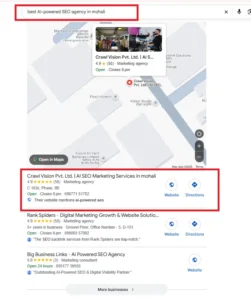
2. MAIntAIn consistent business nap
NAP means name, address, and phone number. Keep these details consistent across your website and important listings.
Check your:
- Google Business Profile and Bing Places listing.
- Website contact page and footer.
- Relevant local and industry directories.
- Social media business profiles.
- Chamber of commerce or professional association listings.
After a move or phone-number change, update key profiles and remove duplicate or outdated listings. Prioritize relevant directories instead of chasing hundreds of citations.
3. Build a strong online review profile
Reviews give prospective customers first-hand context about service quality, staff, products, and how problems are handled.
Build a genuine review process:
- Ask customers for honest feedback after a purchase or completed service.
- Make it easy to leave a review through an approved review link.
- Respond to positive feedback with specific, natural replies.
- Address negative reviews professionally without sharing private details.
- Look for recurring feedback that reveals service or communication problems.
Do not buy reviews, offer rewards for positive ratings, or ask only satisfied customers to review you. Authentic feedback is more useful than an artificially high rating.
4. Create location-specific website content
Your website should clearly explain where you operate. Create a location page when it provides distinct local services, projects, teams, or useful area-specific information.
A useful location page can include:
- Services available in that area.
- Address or service-area details, where relevant.
- Local projects, customer examples, or photographs.
- Appointment, travel, or availability information.
- FAQs specific to customers in that location.
Pro Tip: Connect location pages to relevant service pages through a clear local website optimization strategy.
5. Implement localbusiness schema markup
LocalBusiness structured data helps search engines interpret information about a business. Depending on the business type, relevant properties include:
| Property | Information |
| name | Official business name |
| address | Physical business address |
| telephone | Contact number |
| openingHoursSpecification | Opening hours |
| url | Official website |
| geo | Geographic coordinates |
| sameAs | Other official business profiles |
Choose an appropriate LocalBusiness subtype and make sure the schema markup matches visible page content. Validate the implementation and update it when details change.
Schema describes your business; it does not guarantee AI recommendations. Google does not require special AI schema for its AI search features.
6. Build local brand authority and online mentions
Relevant third-party references add context about your services, reputation, and local involvement beyond your own website.
Look for meaningful opportunities to earn mentions through:
- Local news coverage of genuine business updates or community work.
- Partnerships with local organizations and complementary businesses.
- Sponsorships or participation in relevant community events.
- Professional associations and reputable industry directories.
- Expert contributions to publications serving your audience.
A neighborhood publication mentioning a restaurant’s community event is more meaningful than a listing on an unrelated directory.
7. Make your website accessible to AI search engines
Important content cannot be discovered if relevant crawlers cannot access it.
Review these technical areas:
- Robots.txt: Check that you are not unintentionally blocking important crawlers.
- Indexing: Review noindex directives, canonical tags, and index coverage.
- Internal links: Connect service pages, location pages, and supporting content logically.
- Readable content: Keep essential business and service details available as text.
- Mobile experience: Make navigation, contact details, and booking options easy to use on phones.
Crawler access differs by platform. OpenAI identifies OAI-SearchBot as the crawler for ChatGPT search.
8. Optimize for voice & conversational queries
Voice and AI searches often use complete questions. Answer customers’ real questions naturally, such as:
- “Do you offer same-day appliance repair in Plano?”
- “Which areas do your emergency plumbers cover?”
- “Can I book a consultation on Saturday?”
- “How much does a roof inspection usually cost?”
- “Do you serve commercial as well as residential customers?”
Answer relevant questions on service or location pages. Be specific about availability, service boundaries, pricing factors, and limitations. Do not promise a service or response time your business cannot consistently provide.
How to Track Your Local Business Visibility in AI Search
Measure AI visibility by testing customer queries, recording appearances, and comparing findings with visits and enquiries.
Monitor AI-generated business recommendations
Search for your services and location across ChatGPT, Gemini, Perplexity, and Google AI Mode. Use consistent queries so you can compare how each platform recommends local businesses.
For each search, note:
- Whether your business appears in the results.
- Which competitors are recommended.
- What information AI uses to describe your business.
- Whether your website or other pages are cited.
Pro Tip: Repeat these searches periodically. AI-generated recommendations can change, so one result does not give you a complete picture of your visibility.
Track brand mentions across AI platforms
Monitor how often your business is mentioned and which sources AI platforms use to describe it. Maintain a simple record of the search query, platform, cited pages, competitor mentions, and any incorrect business information.
Over time, these observations can help identify gaps in your online presence, missing business information, or areas where competitors have stronger visibility.
Analyze website traffic from AI search
Use Google Analytics (GA4) to identify traffic from AI platforms where referral information is available. Pay attention to:
- Visits from identifiable AI referral sources.
- Landing pages receiving AI-referred traffic.
- Engagement and enquiries from those visits.
Not every AI-assisted visit will appear as a referral. Some users may discover your business through an AI platform and visit your website later through another channel. Treat referral traffic as an indicator rather than a complete measure of AI visibility.
Monitor Google business profile performance
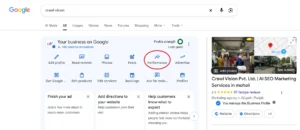
Your Google Business Profile provides useful data about how people discover and interact with your business. Compare Google Business Profile performance over similar periods and monitor:
- Profile views and search activity.
- Website clicks and calls.
- Requests for directions.
- Bookings and other available customer actions.
Look beyond profile views to understand whether that visibility leads to enquiries, calls, or visits. You can also track local SEO ranking to get a clearer picture of your business’s local search performance.
Local SEO Mistakes That Can Hurt Your AI Search Visibility
Avoid these five mistakes that can confuse customers or weaken local discoverability:
- Keyword-stuffing your business name: Adding service or city keywords that are not part of your real name can violate profile guidelines.
- Publishing duplicate location pages: Pages that only swap city names offer little unique information and create a poor user experience.
- Ignoring outdated listings: Old phone numbers, addresses, or opening hours can mislead customers and create inconsistent information.
- Manipulating customer reviews: Fake or incentivized feedback damages trust and may breach platform policies.
- Blocking important crawlers or pages: Accidental robots.txt blocks and noindex tags can prevent search systems from accessing useful content.
Fix issues affecting accuracy, accessibility, and customer experience before chasing new AI-specific tactics.
Conclusion
Local SEO for AI search builds on the fundamentals that help customers discover and trust a business: accurate information, relevant services, genuine reviews, useful local content, and an accessible website.
At Crawl Vision, our experience working on SEO audits and website optimization has shown how gaps in these foundations can affect a business’s search visibility. Strengthen these areas first, then monitor how AI platforms represent your business and whether that visibility leads to meaningful enquiries.