

Google is rolling out a new way of handling links in its search results.
Instead of sending users directly to a webpage, many organic results now pass through a google.com/goto URL first before redirecting to the real destination.
The change was first spotted in testing back in July 2026, and Google has since confirmed the rollout is happening.
What Are Google’s New google.com/goto URLs?
Normally, when you click an organic result in Google Search, the link points directly to the webpage you are about to visit.
With the new system, Google can replace that destination with a URL that starts with google.com/goto. The Google URL acts as a passthrough before redirecting you to the actual page.
For searchers, the process still feels almost identical. You click a result and land on the same webpage. The real shift is happening behind the scenes, where Google appears to be using these server-side redirects to make automated scraping of its results harder.
Before the goto URL update:
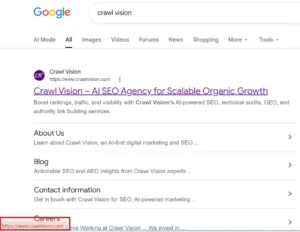
Now, after the goto URL update:
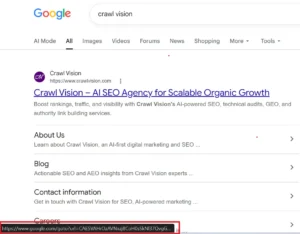
Note: These are the real screenshots taken by the Crawl Vision team.
Why Is Google Introducing This Change?
This move ties into Google’s ongoing effort to protect Search from scraping and abuse.
SEO platforms, rank trackers, search APIs, and AI companies can access and process Google Search results at large scale. A normal search result exposes a straightforward destination URL, making it easier for automated systems to collect information from the page.
The new google.com/goto layer adds another step.
According to Derek Perkins of Nozzle, Google has been testing this anti-bot approach for a while, with rollout nearing 100% across several residential IP providers.
Since the encoded URLs cannot simply be decoded, tools now need to follow the redirect itself to find the destination.
Google Confirms the Rollout
Google had not initially commented on the change, but now confirmed it on August 26.
A spokesperson confirmed this by saying:
“We have a long history of deploying technical measures against evolving forms of abuse, and we regularly take steps to protect our services and users.”
Although Google has not provided detailed technical documentation explaining exactly how the goto URLs work.
What Does This Mean for SEO?
This is the part where the update matters most for SEOs.
Rank trackers and other SEO tools that collect Google Search results programmatically may need to adjust how they process result links.
That does not mean websites will lose rankings because of the change.
This could matter for:
- Rank-tracking platforms
- SERP APIs
- Search scraping systems
- SEO reporting tools
- AI systems that retrieve Google Search results
- Automated competitive research platforms
Should Website Owners Be Worried?
For most website owners, no immediate technical SEO action is required.
The google.com/goto redirect does not indicate that Google has changed how it ranks your website. It is primarily a change to how Google handles links within its own search results.
However, businesses and SEOs should pay attention to the tools they use to monitor organic performance.
If your rank-tracking platform suddenly reports:
- Missing URLs.
- Unusual SERP data.
- Inconsistencies in search-result collection.
Google’s new redirect system could be one possible explanation.
The Bigger SEO Takeaway
Google Search is becoming increasingly difficult to access at scale.
As SEO platforms, AI systems, and automated tools heavily depend on search-result data, Google has stronger incentives to control how that data can be collected.
The google.com/goto rollout is therefore more than a small URL change. It signals another step toward making automated access to Google Search more technically challenging.
For SEOs, the key takeaway is simple: keep an eye on your tools, not your rankings.
The change itself is not an algorithm update, but it could affect the systems that tell you what is happening in Google Search.