

Google rank-tracking tools are facing data collection problems, with some SEO platforms reporting missing keyword positions and inaccurate search results.
The issue raises concerns about whether sudden ranking drops reflect actual changes in Google Search or just inconsistencies in tracking data.
The problem follows Google’s increasing restrictions on automated access to search results. These restrictions can make it harder for third-party tools to collect reliable ranking information.
Why Are Google Rank Tracking Tools Not Working?
Rank-tracking tools automatically collect Google Search results to monitor keyword positions, compare competitors, and measure organic visibility.
Google’s Search spam policies prohibit automated queries used to scrape search results for rank checking without express permission. This creates a challenge for third-party tools that rely on automated data collection to monitor keyword positions.
Recent reports indicate that these tools are encountering three major challenges:
- IP blocking: Automated requests from certain proxy networks may be blocked.
- CAPTCHA challenges: Additional verification requests can interrupt automated data collection.
- Inaccurate search results: Some collected results may differ from the expected listings, potentially causing tools to report incorrect keyword positions.
These issues can affect ranking reports even when a website’s actual search visibility has not changed.
Is Google’s /goto URL Update Related to Rank Tracking Issues?
Google’s google.com/goto redirect rollout introduced another technical hurdle for systems that collect search results automatically.
The redirects route users through Google-owned URLs before sending them to destination pages. This changes how result links are handled and may require automated systems to adapt their URL-processing methods.
Image showing the goto URL update:

However, Google has not confirmed that the /goto rollout caused the reported rank-tracking problems. Access restrictions and inconsistencies in collected search results are separate possible factors, and the precise relationship between these developments remains unclear.
How Much Are Google Rank Tracking Tools Affected?
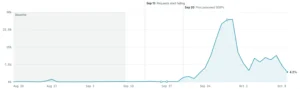
According to Nozzle’s analysis of 27.5 million search results pages across 49 countries, 8% contained potentially altered search results after September 2026. The finding suggests that automated tracking systems may sometimes receive results that do not reflect the usual search listings.
This figure reflects Nozzle’s dataset and classification method. It does not establish that 8% of all Google searches are inaccurate or that every rank-tracking platform is affected.
When these results are recorded as genuine rankings, websites can appear to have dropped out of the top positions even when the change may be caused by inaccurate data collection.
Image showing share of SERPs missing the keywords’ usual sites (per day):
What Should SEO Professionals Do?
SEO professionals should verify unexpected ranking changes before making decisions about content, technical SEO, local SEO rankings, or campaign performance.
Google Search Console provides clicks, impressions, click-through rates, and average position data to help assess organic search performance. Manually checking important search queries can provide additional context.
However, Search Console’s average position is not directly equivalent to an individual keyword position reported by a rank tracker.
Should Website Owners Be Worried?
The tracking issues do not automatically indicate a Google ranking update or an actual loss of organic visibility.
Website owners should monitor search performance trends, check their tracking providers for updates, and avoid reacting to isolated ranking drops without further verification.
They can check the Google Search Status Dashboard for officially reported disruptions to Search services.
The key takeaway: Google’s evolving restrictions on automated search scraping may affect the reliability of third-party rank tracking. For SEO teams, validating ranking data is becoming increasingly important.