

Google Trends has added category filters to its new Explore page, allowing users to refine trend data by predefined categories.
On September 2, 2026, Google Search Central announced the update on LinkedIn. Google said new filters make it easier to refine Trends data for specific categories. Users can apply a category filter with a search query or without entering a query.
What Is the Google Trends Category Filter Update?
Google Trends category filtering is a new option on the Explore page that lets users narrow trend data by predefined topic categories.
Google also highlighted a use case that does not require entering a search term. Users can apply a category filter to explore top-searched terms within a category, region, and timeframe.
The update follows Google’s recent expansion of the Explore experience with Explore Maps and regional breakdowns, which give users more ways to analyze search interest by location.
Category filtering can also help when a search term has multiple meanings. Google uses “jaguar” as an example, where selecting a category can help distinguish searches for the animal from those related to the car manufacturer.
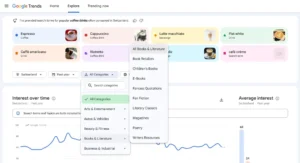
Note: Image is taken from Google Search Central’s official LinkedIn post.
How Does the New Category Filter Work?
Users can open Google Trends’ Explore page and select a category from the category filter.
The filter can be used in two ways:
- With a query: Refine trend data for a specific search term within a category.
- Without a query: Explore top searches within a selected category, location, and timeframe.
Google says this provides a more precise way to explore trends within specific categories.
What Does This Mean for SEOs and Marketers?
The update gives SEOs and marketers another way to research search behavior, which can also help inform content gap analysis as they explore new topics.
Category-level exploration can be used to identify searches within a particular subject without starting with a specific keyword. The filter can also help narrow trend data when a search term has multiple meanings.
However, Google Trends reports relative search interest rather than absolute search volume, so the data should not be treated as a replacement for traditional keyword-volume data.
Trends shows a 0-100 index where the score reflects relative popularity, not exact query counts, so it’s best for spotting patterns and comparing topics, not for precise volume estimates.
The Bigger Takeaway
Google’s latest Google Trends update makes category filtering more prominent in the Explore experience.
For SEOs, the most notable change is the ability to explore category-specific searches without first entering a keyword.
That gives users another starting point for researching what people search for across different topics, regions, and timeframes.