

Google has introduced Gemini 4 Hydrogen to Search, bringing significant changes to how the platform understands questions and presents information. Announced on November 12, 2026, the update focuses on more accurate responses, better website discovery, and richer visual results.
Robby Stein, Google’s Vice President of Product for Search, announced the update on X, calling it “the biggest model upgrade to Search yet.” The new model is designed to handle complex queries and help users find more relevant information across the web.
What Is Gemini 4 Hydrogen?
Gemini 4 Hydrogen is Google’s latest AI model, built to deliver faster and more capable responses across everyday tasks and agentic workflows. Its Search integration focuses on understanding user intent, handling multi-part questions, and generating more useful responses.
Unlike a traditional search experience that primarily matches queries with relevant pages, Google’s AI-powered features can interpret a question, explore related searches, and organize information into a more direct response.
With Hydrogen, Google aims to make this process more precise while still connecting users with relevant websites and resources.
Hydrogen joins Google’s Gemini 4 model family, following the introductions of Argon and Carbon
Recent Gemini 4 Models and Launch Dates:
| Model | Launch date |
| Gemini 4 Argon | October 13, 2026 |
| Gemini 4 Carbon | November 10, 2026 |
| Gemini 4 Hydrogen | November 12, 2026 |
What’s Changing in Google Search?
Google’s announcement highlights four major improvements coming to its Search experience.
1. Better Understanding of Complex Queries
Google Search can now understand more detailed and multi-part questions. Users can describe what they need in natural language, even when their queries contain specific requirements or difficult-to-understand typos.
The model also follows instructions more precisely, helping Search address different parts of a question instead of returning a broad response.
2. Improved Query Fan-Out and Website Discovery
Google is improving its query fan-out technique with Gemini 4 Hydrogen. This approach breaks a user’s question into multiple related searches and explores relevant subtopics at the same time.
As a result, Search can connect users with a wider range of relevant websites and helpful links. Google says this can help people discover sites they might not have found through a more direct search.
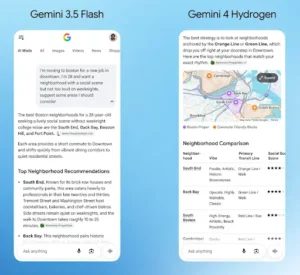
3. More Visual and Interactive Search Responses
Search will also provide more visual and structured answers. Depending on the query, users may see images, comparison tables, organized information, and custom tools.
These responses are designed to make complex information easier to understand and compare without requiring users to navigate multiple pages first.
4. Improved Multilingual Understanding
Gemini 4 Hydrogen also improves how Google understands questions across supported AI Mode languages.
Users can expect more nuanced responses in different languages. This could make AI-powered Search more useful for people who search in languages other than English.
What Does This Mean for SEO?
The update puts another spotlight on how websites appear within AI-powered search experiences. Better query fan-out could create opportunities for relevant websites to appear across a wider range of related searches.
However, Google’s announcement does not confirm any changes to its traditional ranking systems or promise increased organic traffic.
For SEO professionals, the practical takeaway is to create useful, well-structured content that clearly answers specific questions. Covering relevant subtopics and matching content to search intent may help websites remain discoverable as Search becomes more conversational and AI-driven.
Rollout and Availability
Google announced Gemini 4 Hydrogen for Search on November 12, 2026. The company says the update is rolling out globally to all Search users.
Google has also made the model available through the Gemini API, Google AI Studio, and other developer and business products. In Search, Hydrogen is now the default model in AI Mode and is being used for the most difficult questions in AI Overviews.