


The biggest E-E-A-T mistakes include publishing content without first-hand experience, hiding who created it, making unsupported claims, leaving outdated information live, and publishing generic or poorly reviewed AI-generated content. These issues can make content harder to trust.
What Is Google E-E-A-T and Why Does It Matter for SEO?
Google E-E-A-T stands for Experience, Expertise, Authoritativeness, and Trustworthiness. It assesses whether content demonstrates these qualities, while Google’s ranking systems use many signals to determine helpful and reliable content. E-E-A-T itself is not a specific ranking factor.
For SEO, E-E-A-T matters because strong content should demonstrate relevant knowledge, useful experience, reliable information, and reasons for users to trust the source. Google also encourages creating unique, helpful content and adding what you can from your own experience.
So E-E-A-T mistakes are less about missing an SEO checkbox and more about gaps in content quality, transparency, and credibility.
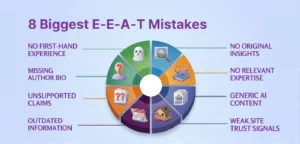
What Are the Biggest E-E-A-T Mistakes?
The biggest E-E-A-T mistakes include weak first-hand evidence, unclear authorship, unsupported claims, outdated information, generic content, poor transparency, and content that does not demonstrate relevant expertise.
1. Publishing Content Without First-Hand Experience
Content can be factually correct and still feel thin when it only repeats information already available elsewhere, instead of providing first-hand experience content. Google specifically encourages publishers to consider what they can add from their own experience.
Bad Example: “SEO audits help websites find technical issues and improve their search rankings.”
Good Example: “During website audits at Crawl Vision, we found common issues such as blocked resources, indexing problems, and unclear URL structures that can prevent otherwise useful pages from performing well.”
2. Not Showing Who Created the Content
Clear authorship or author bios helps readers understand who is responsible for the information. It is especially useful for specialist topics where the author’s experience matters. Google recommends making accurate authorship information clear where readers would reasonably expect it.
Bad Example: “This article explains how to improve your website’s SEO and rankings.”
Good Example: “This article was written by Sagar Rauthan, a digital marketing expert with 6+ years of experience, and explains how to improve your website’s SEO and rankings.”
The image below showcases the clear author name and published date, which is a good E-E-A-T signal:
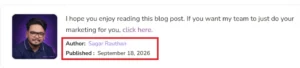
Note: Image is taken from one of Crawl Vision’s blogs.
3. Making Unsupported or Unverifiable Claims
Claims about statistics, research, products, results, or industry trends should be supported when evidence is available. Vague statements can weaken trust.
Bad Example: “Adding an author bio can increase your rankings by 30%.”
Good Example: “An author bio can give readers more context about who created the content, particularly when the subject requires relevant expertise.”
4. Letting Content Become Outdated
Old information can become misleading when statistics, products, regulations, tools, processes, or recommendations change. Updating old content is not simply changing the publication date.
Bad Example: “Google’s Core Web Vitals include LCP, FID, and CLS as its three key page experience metrics.”
Good Example: “As of 2026, Google’s Core Web Vitals include LCP, INP, and CLS as its three key page experience metrics.”
5. Publishing Generic Content With No Original Insight
A page can cover the right keywords and still provide little value if it says what every competing page already says. Google encourages unique, useful content rather than information that could easily be produced by anyone.
Bad Example: “To improve SEO, create quality content, optimize your website, and build backlinks.”
Good Example: “Before building more backlinks, check whether important pages are crawlable, internally linked, and aligned with the search intent they are targeting.”
6. Ignoring Website-Level Trust Signals
E-E-A-T is not limited to body copy. Readers also need to understand who operates a website and who is responsible for published information.
Bad Example: “We are a leading digital marketing company helping businesses grow online.”
Good Example: “Crawl Vision provides SEO, AEO, and GEO services, with clear information about its services, business identity, and ways to contact the team.”
7. Publishing Content Without Demonstrating Relevant Expertise
Publishing on a new subject is not automatically an E-E-A-T problem. The issue is whether the content demonstrates expertise and knowledge needed to address that subject accurately and usefully.
Bad Example: “Technical SEO is easy to fix. Just improve your website speed and add keywords to your pages.”
Good Example: “Technical SEO can involve indexing, crawlability, site architecture, structured data, page experience, and other factors, so the right fixes depend on the issues affecting the website.”
8. Treating AI-Generated Content as Finished Content
Using AI to assist with writing is not, by itself, the problem. The risk comes when generated material is published without fact-checking, editorial judgment, original insight, or useful contribution.
Bad Practice: A site publishes dozens of AI-written articles with repetitive explanations, unverified claims, and no meaningful human review.
What’s Right: AI can assist with drafting and research, but published content should be fact-checked, edited, and strengthened with relevant expertise, original insights, and human judgment.
How Can You Improve E-E-A-T?
You can improve E-E-A-T by strengthening the evidence of experience, expertise, authority, and trust throughout both your content and website.
| Area | What to improve |
| Experience | Add first-hand observations, examples, processes, and lessons where relevant. |
| Expertise | Demonstrate accurate, subject-specific knowledge and appropriate review. |
| Authoritativeness | Make relevant credentials, reputation, references, and external recognition easier to understand. |
| Trustworthiness | Be transparent about authorship, business identity, sources, limitations, and corrections. |
Start with your most important pages. Ask whether each page answers the reader’s question, provides something genuinely useful, and makes its claims easy to understand or verify.
For commercially important or sensitive topics, review sources, authorship, dates, and factual claims carefully. If AI is part of the workflow, add human review before publication.
In the websites we’ve audited at Crawl Vision, around 60% had at least one clear E-E-A-T gap, such as missing author information, weak sourcing, unclear business details, or unsupported claims. These issues are often easy to overlook because the content itself may appear useful at first glance.
Conclusion
E-E-A-T is best treated as a quality and credibility framework, not a checklist of ranking tricks. The biggest mistakes happen when content lacks real experience, clear responsibility, reliable evidence, current information, or useful original insight.
Fixing those gaps can make your website more useful to readers and give search systems clearer signals about the quality and purpose of your content. The goal is not to make a page look “optimized for E-E-A-T.” The goal is to make the page genuinely worth trusting.