


Digital PR campaigns help build brand authority by earning credible media coverage, relevant backlinks, expert recognition, and brand mentions across trusted publications.
These signals can strengthen public trust, increase brand awareness, support SEO, and help potential customers discover a business through traditional search and AI-powered search experiences.
What Is Brand Authority in Digital Marketing?
Brand authority is the level of trust, recognition, and credibility a business earns within its industry. It develops when customers, industry experts, publishers, and other credible sources consistently recognize a brand for its knowledge and value.
Brand authority is different from domain authority. Domain authority is a third-party SEO metric that estimates a website’s ranking potential. Brand authority is broader and reflects how people perceive a company’s expertise, reputation, and reliability.
Why brand authority matters in digital marketing:
- Builds customer trust: People are more likely to consider a business when credible sources recognize its expertise.
- Improves brand recognition: Consistent exposure helps audiences remember a brand when they need its products or services.
- Supports search visibility: Relevant backlinks and useful content can help search engines discover and understand a website.
- Creates competitive differentiation: Recognized expertise gives customers a reason to consider a brand beyond price alone.
Digital PR helps businesses earn this recognition through external coverage rather than relying entirely on their own marketing channels.
How Do Digital PR Campaigns Build Brand Authority?
Good digital PR campaigns build brand authority by giving credible third parties a reason to discuss, reference, and recommend a business’s expertise. Five mechanisms contribute to this process.
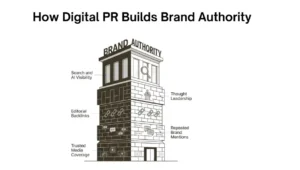
1. Earn Credibility Through Trusted Media Coverage
Coverage in relevant industry publications can introduce a brand to new audiences and provide independent context for its expertise. A useful article featuring a company’s research or expert commentary can be more persuasive than a self-promotional claim on its website.
Best practices:
- Target publications that serve your industry and intended audience.
- Pitch newsworthy stories supported by reliable data or expert insights.
- Prioritize editorial relevance and coverage quality over publication volume.
Expert advice: A mention in a respected niche publication may be more valuable to a specialist business than coverage in a larger outlet with little audience overlap.
2. Strengthen brand recognition through repeated mentions
Repeated, relevant brand mentions can help audiences associate a business with a particular topic or area of expertise.
For example, a cybersecurity company that regularly contributes useful commentary to technology publications may become more recognizable for its security knowledge.
Best practices:
- Maintain consistent brand messaging across PR campaigns.
- Share original insights that journalists and publishers can reference.
- Build ongoing relationships with relevant media outlets and industry voices.
Expert advice: Focus on earning mentions in meaningful contexts rather than pursuing a high count. Brand mentions don’t guarantee better rankings, but they can contribute to awareness and recognition.
3. Build SEO authority with relevant editorial backlinks
Digital PR can earn backlinks when publishers link to a brand’s research, resources, or expert contributions. Relevant editorial links can help search engines discover pages and understand connections between websites.
Best practices:
- Publish original research, useful resources, or data that others have a reason to cite.
- Earn links from relevant publications through genuine editorial interest.
- Assess link relevance, placement, and referral value instead of chasing link counts.
Expert advice: Google considers links among the signals used by its ranking systems, but domain authority scores from third-party tools are not Google ranking factors. Focus on earning legitimate links that make sense for readers, not manipulating metrics.
4. Establish expertise through thought leadership
Thought leadership allows a business to demonstrate its knowledge through informed opinions, original research, interviews, and expert commentary. Digital PR helps distribute those insights beyond the company’s own website.
Best practices:
- Offer informed commentary on developments affecting your industry.
- Publish original insights based on research or genuine professional experience.
- Make knowledgeable team members available for interviews and media contributions.
Expert advice: Specific explanations and evidence are more convincing than broad claims about being an industry leader. Give journalists a clear reason to seek your perspective.
5. Create a stronger brand presence across search and AI platforms
Digital PR may support brand discovery by creating credible references to a business across the web. These references can help people encounter a brand through traditional search, industry publications, and AI-powered search experiences.
Best practices:
- Keep brand descriptions and important business facts consistent across credible sources.
- Publish clear, verifiable information about your expertise and services.
- Monitor brand mentions, referral traffic, and search visibility.
Expert advice: Google states that its AI Overviews and AI Mode rely on existing Search systems and foundational SEO practices. Digital PR does not guarantee AI citations. Keep your website crawlable, publish useful content, and make important information accessible in text.
Which Digital PR Campaigns Help Build Brand Authority?
Different digital PR campaign formats help businesses demonstrate expertise, attract media attention, and earn relevant coverage. The right approach depends on the audience, industry, and the story.
- Original Research and Data Studies
Original research gives journalists evidence they can use to explain an industry trend or challenge an existing assumption.
Example: “Crawl Vision Survey of 500 Small Businesses Reveals Most Common AI Search Readiness Gaps”
- Expert Commentary
Expert commentary provides a useful professional perspective on a developing story or industry issue.
Example: “Crawl Vision’s SEO Expert Explains Why Websites Rank on Google but Remain Invisible in AI Search“
- Newsjacking
Newsjacking involves responding to a timely news development with relevant analysis or expertise. The response must add value rather than simply mention a trending topic.
Example: “Google Expands AI Search Features: Crawl Vision Explains What Brands Should Do Next?”
- Industry Reports
Industry reports organize research, survey findings, or market observations into a resource that journalists and professionals can reference.
Example: “Crawl Vision’s 2026 AI Search Readiness Report: Common Technical SEO Issues, Content Gaps, & Brand Visibility Challenges”
- Interviews or Podcasts
Interviews and podcasts allow specialists to explain complex subjects, share experience, and reach audiences who already follow a relevant publication or host.
Example: “Crawl Vision’s Founder Sagar Rauthan on Building Brand Authority Through SEO, Digital PR, and AI Search Visibility”
How to Build Brand Authority With a Digital PR Campaign
In 2026, building lasting brand authority through digital PR requires a clear objective, a credible story, and consistent outreach. Follow these five steps to turn expertise into meaningful media opportunities.
- Define your goal and audience.
Decide whether you want to increase industry recognition, attract relevant backlinks, reach potential customers, or establish a spokesperson as an expert. - Find a newsworthy angle.
Look for original data, emerging trends, unanswered industry questions, or practical insights that publications would find useful. - Create a credible asset.
Develop a research report, expert commentary, original survey, or resource. Verify facts, document sources, and make the findings easy to understand. - Pitch relevant publications.
Identify journalists and editors who cover your subject. Personalize each pitch, explain why the story matters to their audience, and provide supporting evidence. - Measure results and improve.
Track media coverage, relevant backlinks, brand mentions, referral traffic, branded search activity, and qualified leads. Use the results to refine future campaigns.
Remember that media coverage cannot be guaranteed. A successful campaign is not simply one that earns the most placements. Relevance, credibility, audience fit, and meaningful business outcomes matter more than volume alone.
Conclusion
Digital PR campaigns help build brand authority by earning credible media coverage, increasing brand recognition, demonstrating expertise, and attracting relevant editorial backlinks. Over time, these efforts can strengthen a business’s reputation and support its organic search visibility.
The most effective strategy combines newsworthy stories with genuine expertise and consistent measurement. At Crawl Vision, connecting digital PR with a broader SEO and search visibility strategy can help businesses build a stronger online presence without treating backlinks as the only measure of success.