


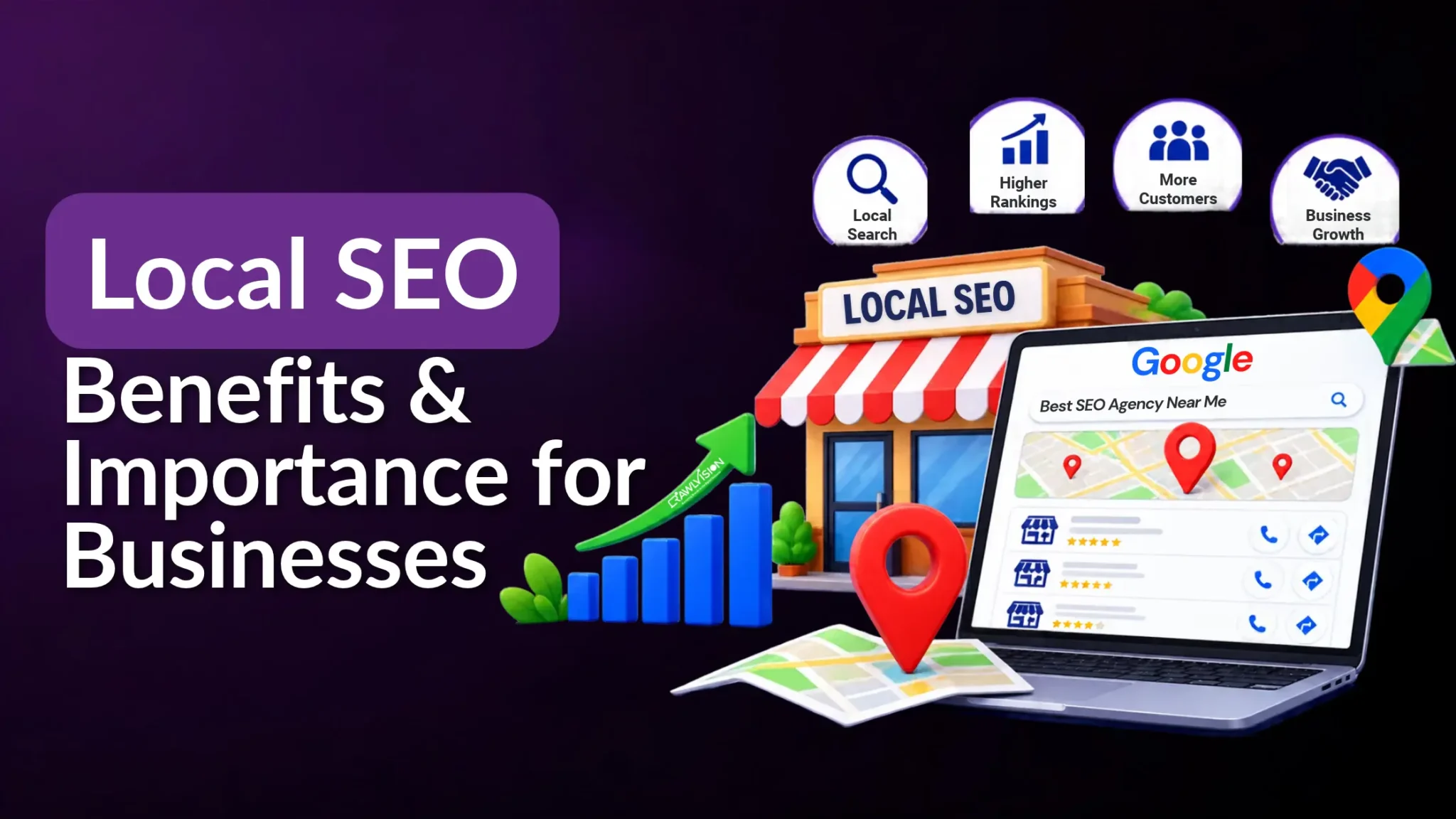
When someone searches for a nearby restaurant, dentist, plumber, or marketing agency, they usually want a business they can contact or visit without looking too far. But how do businesses appear in these location-based searches? That’s where local SEO comes in.
Local SEO helps businesses improve their visibility in location-based search results, making it easier for nearby customers to discover their products or services.
Whether you run a small shop, a professional service, or a multi-location business, local search optimization can help you reach people more likely to become customers.
What Is Local SEO?
Local SEO (local search engine optimization) improves a business’s online presence to attract customers from relevant local searches. It helps businesses appear in Google Search, Google Maps, and other search experiences when people look for products or services in a particular area.
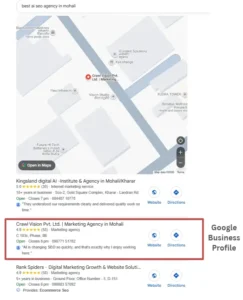
For example, when someone searches for “best AI SEO agency in Mohali” Google displays relevant local businesses based on the search query and the user’s location.
Local SEO focuses on helping search engines understand three important things about your business:
- What you offer: The products, services, and business categories you specialize in.
- Where you operate: Your physical location or the areas you serve.
- Why customers should trust you: Your reviews, online reputation, website information, and other credibility signals.
Unlike broader SEO strategies that target audiences across different regions, local SEO focuses on reaching customers within a specific geographic area.
How Does Local SEO Work?
Local SEO helps search engines identify businesses that best match a user’s search query and location. Google uses information from business profiles, websites, customer reviews, and other online sources to understand which businesses may be relevant.
For instance, imagine someone searches for “best Italian restaurant in Austin.” Google may display a map with three local business listings, followed by other relevant websites.
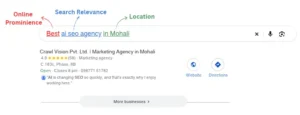
Several factors influence these results:
- Search relevance: How closely a business matches the user’s query.
- Location: How close the business is to the searcher’s location or specified area.
- Online prominence: How well-known and established the business appears online.
Google also considers information available across the web to understand businesses. This makes an accurate Google Business Profile, useful website content, and a consistent online presence important parts of local search optimization.
Why Is Local SEO Important for Your Business?
Local SEO is important because it connects businesses with people actively looking for nearby products or services. Instead of trying to reach everyone, businesses can focus on customers searching within the areas they serve.
Here are five ways local SEO can benefit your business.
1. Helps customers discover your business
A well-optimized local presence makes it easier for potential customers to find your business through relevant location-based or “near me” searches.
Without local SEO, even an established business may struggle to reach customers who are actively looking for its services.
2. Drives relevant local traffic
Local SEO attracts visitors who are already interested in products or services available in their area. This makes the traffic more relevant than visits from people who cannot realistically become customers because of their location.
A dental clinic appearing for “dentist in Denver” is more likely to attract potential patients from its service area than someone searching for dental information from another state.
3. Builds trust and credibility
Customers often evaluate a business before contacting or visiting it. They may check its Google Business Profile, customer reviews, photographs, operating hours, and website.
A complete business profile, genuine customer feedback, and accurate information help people make informed decisions. Responding professionally to reviews also shows that the business pays attention to customer experiences.
4. Generates more calls, leads, and store visits
Local search results give customers convenient ways to interact with businesses. Depending on the listing and device, people may call, visit a website, request directions, or explore available services directly.
You can generate leads through Google Business Profile if your listing is well optimised, has consistent NAP, and has genuine reviews.
For a local restaurant, this could mean more direction requests and reservations. For a home repair company, it could mean more calls from people looking for immediate assistance.
5. Helps small businesses compete locally
Small businesses may not have the marketing budgets or brand recognition of larger companies. Local SEO gives them another way to reach customers by building visibility for relevant searches in their operating areas.
A neighborhood bakery, for example, can improve its chances of being discovered by targeting relevant local searches rather than competing for broad terms such as “best bakery” nationwide.
What Are the Key Local SEO Ranking Factors?
Google primarily considers three factors when determining local search rankings: relevance, distance, and prominence. Businesses can improve their local search presence by strengthening these areas and maintaining accurate online information.
Google business profile optimization
A complete, accurate, and well-optimised Google Business Profile helps Google understand your business and match it with relevant searches. Add the correct business name, primary category, address or service area, contact information, operating hours, and services.
Relevance to the search query
Relevance describes how closely your business matches what someone searches for. Selecting accurate business categories and providing detailed information about your products and services helps search engines understand what you offer.
Distance from the searcher
Distance refers to how far a business is from the person searching or the location mentioned in the query. Businesses generally cannot control where someone searches from, but they should accurately represent their actual location and service areas.
Business prominence and online reputation
Prominence refers to how well-known a business is. Google considers information such as links from other websites and customer reviews when evaluating how prominent a business appears.
Earning genuine reviews, maintaining a positive reputation, and building relevant local mentions can support your online presence.
Website quality and local relevance
Your website also supports local visibility. Clear service descriptions, useful location-specific pages, accurate contact information, and relevant local content help search engines understand your business and its geographic relevance.
How Does Google Maps Fit Into Local SEO?
Google Maps is an important part of local SEO because it helps people discover businesses, check their locations, and find directions. When users search for nearby services, Google may display relevant businesses directly on a map.
These listings typically include business names, addresses, operating hours, reviews, contact details, and directions.
For businesses with physical locations or eligible service-area operations, an optimized Google Business Profile helps maintain accurate information across Google Search and Maps.
However, ranking on Google Maps does not automatically guarantee a top position. Local visibility still depends on how relevant and prominent a business is, along with its distance from the searcher.
Local SEO vs. Traditional SEO: What’s the Difference?
The main difference between local SEO and traditional SEO is the audience and geographic focus. Local SEO targets customers searching within specific locations, while traditional SEO generally focuses on improving visibility for broader, often non-location-specific searches.
| Comparison | Local SEO | Traditional SEO |
| Primary focus | Location-based searches | Broader organic searches |
| Target audience | Nearby customers | Wider or global audiences |
| Geographic targeting | Specific cities, regions, or service areas | Can target multiple countries or regions |
| Major visibility areas | Local Pack, Google Maps, local organic results | Organic search results |
| Important signals | Relevance, distance, prominence | Content relevance, backlinks, technical quality, and other SEO signals |
| Common strategies | Google Business Profile, local keywords, reviews, local citations | Content optimization, keyword research, technical SEO, link building |
| Example search | “Dentist in Chicago” | “How to prevent tooth decay” |
Both approaches share important SEO fundamentals, including useful content, a technically sound website, and relevant links. Businesses can use them together to reach both local and broader audiences.
How Can You Improve Your Local SEO?
You can improve local SEO by making your business information accurate, strengthening your website’s local relevance, and building a trustworthy online presence. Start with these practical steps:
- Optimize Your Google Business Profile: Complete your business information, select the correct categories, add relevant services, and keep operating hours updated.
- Target Relevant Local Keywords: Research phrases customers use when searching for your services and locations. Include hyper-local keywords and relevant terms naturally in your website content, headings, and page titles.
- Create Location-Specific Content: If you serve multiple areas, create useful location pages that explain your services in each area. Avoid publishing duplicate pages with only city names changed.
- Maintain Consistent Business Information: Keep your business name, address, and phone number accurate across your website, Google Business Profile, and relevant directories.
- Earn Genuine Customer Reviews: Encourage customers to share honest feedback after their experience. Respond to positive and negative reviews professionally without offering incentives for positive ratings.
- Build Relevant Local Backlinks: Earn links from credible local organizations, industry websites, community publications, and relevant business partners.
- Track Your Local SEO Performance: Monitor local keyword positions, Google Business Profile performance (interactions, website traffic, calls, and enquiries). Tracking local SEO rankings helps you understand where your visibility is improving and which areas need attention.
Conclusion
Local SEO helps businesses become more visible to people searching for relevant products and services in their area. From improving Google Maps visibility to attracting qualified website traffic and generating enquiries, it supports the connection between online discovery and real business opportunities.
However, local visibility requires consistent effort. Keep your business information accurate, publish useful local content, earn genuine reviews, and monitor your performance to identify opportunities for improvement.
At Crawl Vision, we believe sustainable search visibility starts with helping the right audience discover the right business at the right time.