


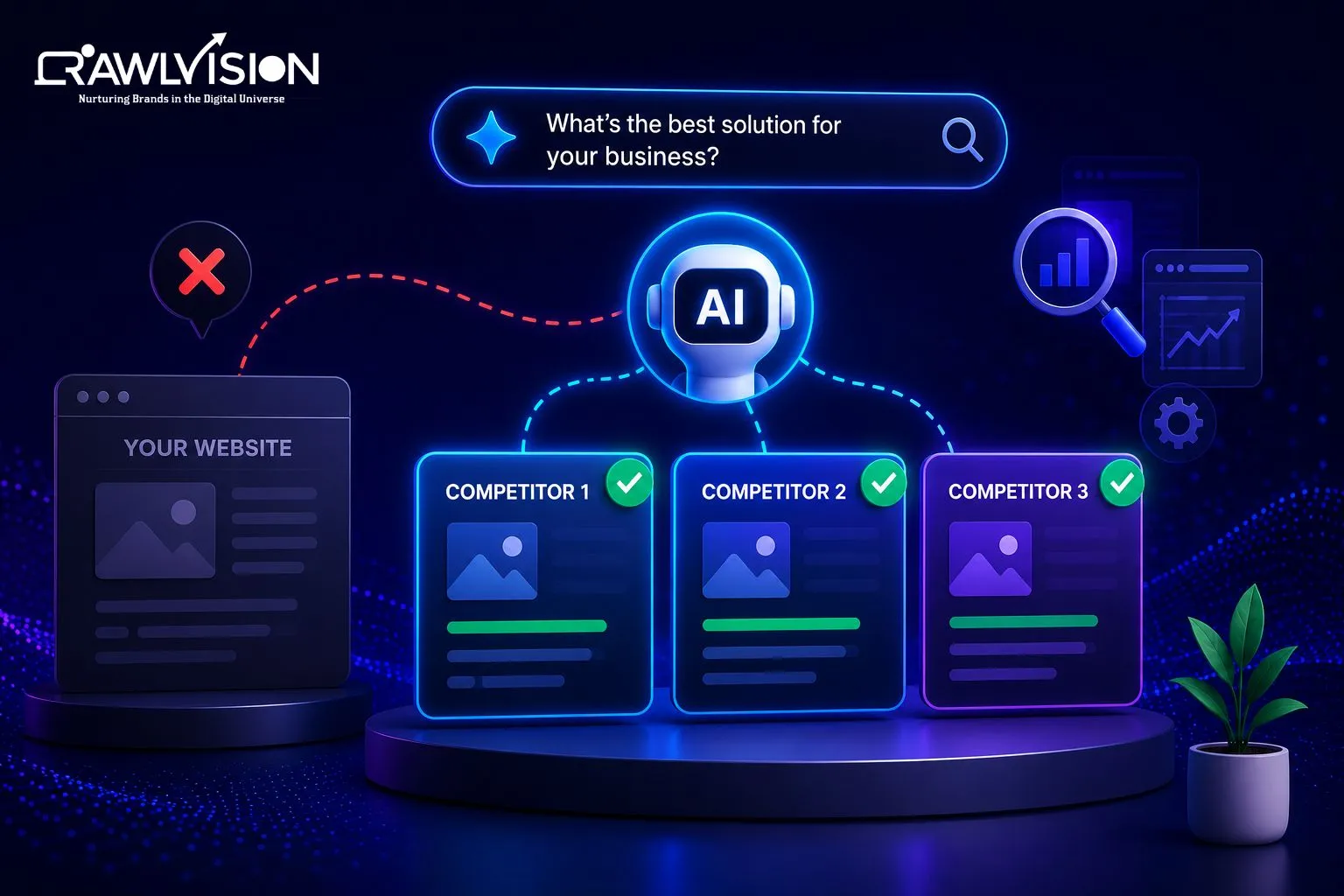
You Google something in your own industry. ChatGPT, Perplexity, or Google’s AI Overview answers the question and names three other companies. Not yours.
It’s not because they rank higher in Google, but because they have stronger authority, trust, and relevance across the web.
It’s a real shift in how people find businesses, and it’s moving faster than most companies can react to.
In short, AI doesn’t just rank websites; it recommends the sources it trusts the most.
Why AI Picks Your Competitor Instead of Your Website
1. They Have Greater Topical Authority
AI prefers websites that consistently publish helpful content around a specific subject.
For example, imagine two digital marketing agencies.
- Agency A has over 200 articles covering SEO, AI search, local SEO, content marketing, and technical SEO.
- Agency B has a homepage and a handful of blog posts.
Even if both target similar keywords, AI is more likely to recommend Agency A because it has demonstrated deeper expertise over time.
2. They Have More Credible Mentions Across the Web
AI doesn’t only learn from your website. It also evaluates how other trusted websites mention your brand.
These signals include:
- News articles
- Industry publications
- Expert blogs
- Podcasts
- Business directories
- Research reports
If authoritative websites frequently mention your competitors while your brand has little presence beyond its own website, AI has stronger evidence to recommend them.
3. Their Content Better Answers User Questions
AI search is designed to provide direct answers. Content that clearly explains a topic is much easier for AI systems to understand and cite.
Instead of writing vague marketing statements like:
“We provide innovative AI optimisation solutions.”
Write content that answers actual questions:
“AI search recommends websites based on authority, relevance, trusted citations, structured data, and high-quality content.”
The clearer your content, the more useful it becomes for both users and AI to grasp.
4. Their Website Is Easier for AI to Understand
Content structure matters. AI can process information more effectively when pages are organised with:
- Clear headings
- Short paragraphs
- Bullet points
- FAQ sections
- Internal links
- Schema markup
A well-structured article is easier for both readers and AI models to scan and understand.
5. They Keep Their Content Updated
AI favors information that reflects the latest developments.
If your competitors regularly update their articles with new examples, statistics, screenshots, and industry changes while your content hasn’t been refreshed for years, AI may view their information as more reliable.
Regular updates signal that your website remains active and trustworthy.
Example: Why AI Chooses One Company Over Another
Imagine someone searches: “What’s the best AI SEO tool for small businesses?”
Company A has:
- Comprehensive buying guides
- Original research
- Industry mentions
- Positive customer reviews
- Updated product pages
- Expert-written content
Company B has:
- A product page
- Five blog posts
- Few external mentions
- No reviews
Even if Company B ranks higher for several keywords, AI is more likely to recommend Company A because it has stronger evidence of expertise, trust, and authority across the web.
How to Increase Your AI Search Visibility
Fix On-Page Basics
- Answer the core question in the first 1-2 sentences of a section.
- Use headers that match how people actually phrase questions.
- Include specific numbers, dates, and examples instead of vague claims.
- Keep paragraphs short, 2-4 sentences.
Build authority outside your own site
- Get mentioned in industry roundups and trade press.
- Encourage genuine reviews on third-party platforms.
- Show authors with real bios, not “Admin”.
Check the technical basics
- Confirm your site isn’t accidentally blocking AI crawlers via robots.txt
- Make sure key pages are fast, mobile-friendly, and not hidden.
Track actual AI visibility, not just Google rankings
- Track how often your brand is mentioned across ChatGPT, Perplexity, Gemini, and AI Overviews for key topics.
- Check which competitors get cited instead, and for which questions.
- Check whether AI referral traffic converts.
Key Fact: Only 16% of Fortune 500 companies currently track AI search performance, meaning most of the market isn’t paying attention yet.
Conclusion
If AI search recommends your competitors instead of your website, the problem is rarely your Google ranking alone. AI looks for the brands it trusts most, based on content quality, topical authority, reputation, and supporting evidence from across the web.
The best way to improve your AI visibility is to consistently publish helpful content, demonstrate real expertise, earn credible mentions, and keep your website updated.
As AI search continues to evolve, businesses that focus on building trust, not just rankings, will have the greatest chance of becoming the recommended answer.

