

OpenAI introduced GPT-6 Astra on September 3, 2026, its latest model focused on advanced reasoning, computer use, coding, science, and AI agent workflows.
The company describes GPT-6 Astra as a major step forward in computer use, coding, and reasoning. The model is designed to complete tasks that previously required users to guide AI through individual steps.
What’s New in GPT-6 Astra?
GPT-6 Astra improves computer use, coding & agent workflows, and reasoning performance, helping it handle complex tasks with less human guidance.
1. Advanced Computer Use
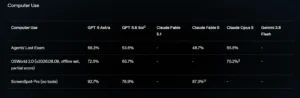
GPT-6 Astra can interact with computers to complete tasks such as filling forms, updating CRM records, managing calendars, conducting web research, analyzing data, and creating websites.
OpenAI says Astra scored 72.6% on OSWorld 2.0, compared with 65.7% for GPT-5.6 Sol. The model also completed tasks faster in OpenAI’s latency testing.
2. Improved Coding and Agent Workflows
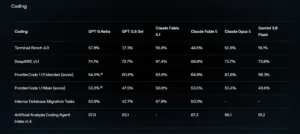
GPT-6 Astra improves long-running coding and agent tasks through its integration with Codex. It can retain and retrieve important information across context windows, helping it maintain requirements and results throughout complex workflows.
Astra can also create documents, spreadsheets, and presentations while following existing templates and instructions.
3. Stronger Reasoning and Benchmark Performance
GPT-6 Astra delivers stronger results on advanced reasoning and multimodal evaluations.
OpenAI reports a 97.6% score on FrontierMath Tier 4 and 99.9% on ARC-AGI-3, highlighting improvements in complex problem-solving and reasoning.
These advances could also influence how AI systems evaluate and select information from websites for their responses.
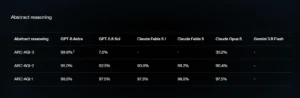
Note: The benchmark data shown in these images is sourced from OpenAI’s official GPT-6 Astra announcement.
OpenAI Highlights Science and Cybersecurity Gains
GPT-6 Astra is also designed for scientific research and cybersecurity tasks. OpenAI says the model can work with specialized scientific software to analyze data and support research workflows.
During cybersecurity testing, Astra discovered two previously unknown zero-day vulnerabilities.
OpenAI has classified the model as reaching the Critical level for cybersecurity capability under its Preparedness Framework. The company says it has added additional safeguards to address the risks associated with these capabilities.
What GPT-6 Astra Means for AI Search and Automation
GPT-6 Astra highlights the shift from AI systems that primarily answer questions to agents that can take actions.
For AI search, this could mean greater use of systems that can research information, navigate websites, evaluate content, and complete tasks instead of simply returning search results.
For businesses, stronger computer-use capabilities could also make AI agents more useful for automating repetitive, multi-step workflows.
This also raises a broader question for SEO teams: can ChatGPT replace traditional SEO tools, or will platforms such as Ahrefs and Semrush remain essential?
Availability
GPT-6 Astra began rolling out to a limited set of organizations on September 3, 2026. OpenAI says it will become available to ChatGPT Plus, Pro, Business, and Enterprise users, as well as through the OpenAI API, Microsoft Azure, and AWS Bedrock.