


Introduction
Your customers aren’t the only ones judging your brand consistency. Search engines and AI platforms are too.
If your website, social profiles, business listings, and content send mixed signals, Google and AI search engines may struggle to understand your business. That confusion can reduce your search visibility, weaken your brand authority, and even affect whether AI systems recommend your business.
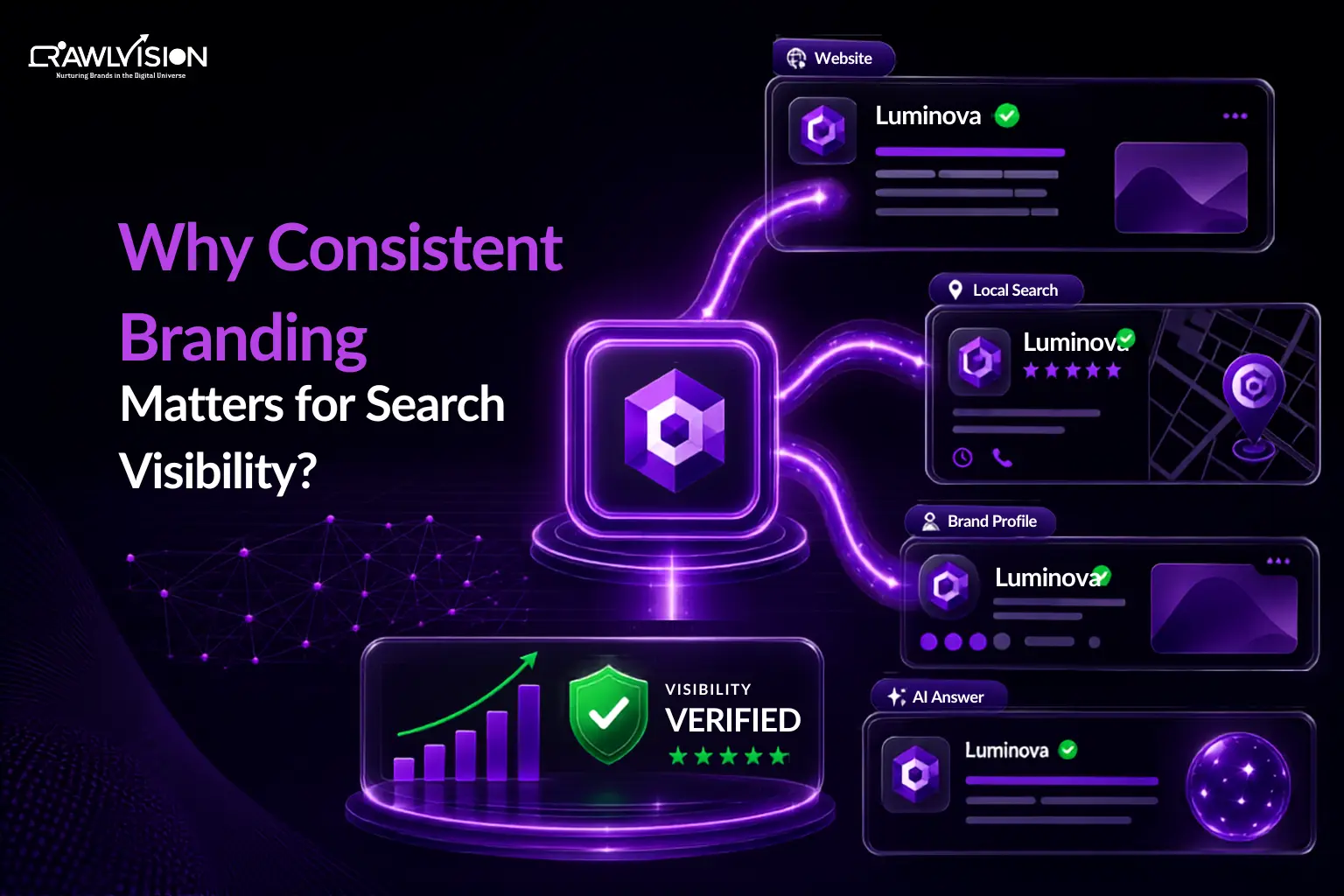
Consistent branding helps search engines and AI recognize your business as a single, trustworthy entity. This strengthens trust, reinforces your expertise, and improves your chances of appearing in both traditional search results and AI-generated answers.
In 2026, consistent branding isn’t just a marketing best practice. It’s an important SEO and AI search strategy. This guide explains why it matters and how to build a digital branding strategy that supports modern SEO, Generative Engine Optimization, and AI search visibility.
What Is Consistent Branding?
Consistent branding means presenting your brand’s identity: logo, colors, tone, values, and key messages, in a unified way across all channels. This includes your website, social profiles, ads, email, directories, and even offline materials.
- Visual identity: logo usage, color palette, typography, imagery style.
- Messaging: tagline, value proposition, tone of voice, brand story.
- Structural signals: business name, NAP details, about page, schema markup.
When these elements align, search engines can map your brand as a clear entity in the Knowledge Graph, making it easier to rank and be cited.
Why Consistent Branding Matters for Search Visibility
Search engines prioritize brands users recognize and trust. Consistent branding amplifies four critical ranking drivers: recognition, more searches, authority, and trust.
1. Strong Brand Recognition
People are more likely to remember and search for brands they repeatedly encounter.
Example: Someone reads your blog. Later, they see your LinkedIn post. This creates familiarity with your brand, leading to more name searches and higher recognition.
2. Increased Brand Searches
Strong, consistent branding makes people search for your name instead of generic terms. This “reverse SEO” effect lowers acquisition costs and increases organic CTR.
- Branded queries indicate demand and relevance to search engines.
- Higher CTR on branded results further reinforces rankings.
3. Improved E-E-A-T Signals
Google’s E-E-A-T framework (Experience, Expertise, Authoritativeness, Trustworthiness) rewards brands that demonstrate credibility. Consistency signals professionalism and reliability, the key trust factors.
- A cohesive brand looks more authoritative to users and algorithms.
- Trustworthy brands earn more links, mentions, and branded searches.
4. Better AI Citation Potential (GEO)
AI answer engines (Gemini, Perplexity, Copilot, ChatGPT) prefer clear, authoritative, and well-structured sources. Consistent branding helps attribute facts so AI systems recommend your brand confidently.
Takeaway: Consistency doesn’t just help you rank; it helps you get cited as the source in AI answers.
How Consistent Branding Boosts SEO and GEO Performance
Consistent branding strengthens SEO through both traditional and AI-driven pathways.
Traditional SEO Benefits
- Higher CTR: Recognizable brands get more clicks in SERPs.
- Lower CPC: Strong brand equity improves Quality Score in paid search.
- More Links & Mentions: Trusted brands earn more earned media, a key authority signal.
AI Search (GEO) Benefits
AI engines favor sources that are easy to scan, verify, and attribute. Consistency supports this by:
- Reducing entity ambiguity: One clear brand identity means fewer misattributions.
- Increasing citation likelihood: Clear “About,” schema, and structured Q&A make your content more citable.
- Improving answer-box share: Structured, authoritative content is more likely to appear in AI Overviews.
Practical insight: Gartner predicts 40% of B2B queries will be satisfied inside answer engines by 2026, making GEO essential.
Common Branding Mistakes That Hurt Search Visibility
Avoid these pitfalls that fragment your brand signals and weaken SEO:
- Inconsistent NAP: Different business names/addresses across directories confuse local SEO.
- Mixed messaging: Changing value propositions or tone dilutes authority.
- Logo variations: Too many logo versions reduce recognition.
- Missing schema: No Organization or SameAs schema limits Knowledge Graph mapping.
- Unclaimed profiles: Unverified social and directory profiles create competing entities.
How to Build a Consistent Digital Branding Strategy
Creating consistent branding doesn’t require a complete rebrand. It starts with documenting your identity and applying it everywhere.
Step 1: Define Your Brand
Lock in your positioning, logo/colors, and core messages in a simple brand guide so every channel uses the same voice and visuals.
Step 2: Audit Every Platform
List all your profiles, directories, and content, then fix mismatches in name, address, phone, logos, and bios so search engines see one clear brand.
Step 3: Standardize Your Content
Use on-brand templates for posts, ads, and emails, and add Organization schema plus clear Q&A blocks so AI engines can recognize and quote you.
Step 4: Build Brand Authority
Publish proof (case studies, team bios) and earn third‑party mentions and reviews to signal trust and topical authority to Google and AI search.
Step 5: Monitor and Update Regularly
Re-check key brand signals every few months and track branded searches and AI citations to keep your visibility strong over time.
Conclusion
Consistent branding is important for search visibility because it helps search engines and AI systems recognize your business as a single, authoritative entity.
When your messaging, visuals, and expertise stay aligned across every touchpoint, search engines can understand your brand more confidently, boosting SEO branding, brand authority, and trusted brand mentions.
Unify branding and SEO into one strategy: a clear digital branding strategy with helpful, consistent content gives your business a stronger foundation for long-term organic growth and AI citations.

